AI underwriting, inflation model drift, and regulated credit
AI underwriting at 35% inflation: when the models break
Galal Elbeshbishi, Co-Founder and COO of Synapse Analytics, explains how macro shocks and inflation fracture historical credit training data, why banks demand explainable reason codes over black-box scores, and why production AI is an accountability problem before it is a model problem.
This is the full episode as an illustrated read. Prefer to watch? Press ▶ Watch.
In this episode
- 1From a slide to a live loan bookA credit model is only as good as the real data it runs on.
- 2When inflation moves the ground under a modelInflation is a new signal to watch, not proof that the model failed.
- 3Compare borrowers to today's crowd, not last year's poundRanking applicants against today's cohort holds up under inflation better than fixed pound cutoffs.
- 4Why a bank must explain every rejectionA rejection that cannot be explained cannot be used, so reason codes matter.
- 5How to win over a bank's credit committeeCredit committees buy risk controls and a clear view of the portfolio, not AI demos.
- 6Reading hundreds of credit bureau fields, not one numberThe value is in the unused bureau and portfolio signals, used inside your own policy rules.
- 7Millions in the bank, rejected for a 5,000-pound loanBank-account cash flow shows who can repay, even before a first loan is on record.
- 8Keeping data at home beats conference hypeRules that keep data local looked like a limit, but became a lasting advantage.
- 9Agents prepare the file; people stay accountableAI agents earn trust by preparing files that a human signs off.
- 10A checklist for models under inflationTreat inflation as a live signal, explain every decision, and keep a human accountable.
Key takeaways (12)
- 01. Clean data first Slide-deck accuracy collapses if production pipelines remain uncleaned.
- 02. Macro drift is signal Inflation is a new feature entering the population, not a reason to abandon ML.
- 03. Inflow shifts fast A region jumping to 20% of volume breaks static forecasts even with zero fraud.
- 04. Cohort over nominal Bracket applicants against today's cohort instead of last year's pound cutoffs.
- 05. Reject with reasons CBE and FRA rules require exact 1-2-3-4 causes, never 'the machine said no.'
- 06. Second Look recovery Show near-miss DBR denials which card or facility to close to qualify.
- 07. Speak portfolio Credit committees trust automated policy controls on their own book, not hype.
- 08. Mine i-Score depth Use hundreds of bureau and card-issuer signals instead of one score and a flag.
- 09. Thin-file cash flow Score internal deposit activity so millionaire non-borrowers aren't denied 5k.
- 10. Sovereignty as moat On-prem and sovereign deployment protects customer records and proprietary IP.
- 11. Focused beats flashy Purpose-built Arabic OCR and scoring beat expensive open-ended GenAI pilots.
- 12. Human accountability Let agents assemble auditable dossiers, then require human sign-off to act.
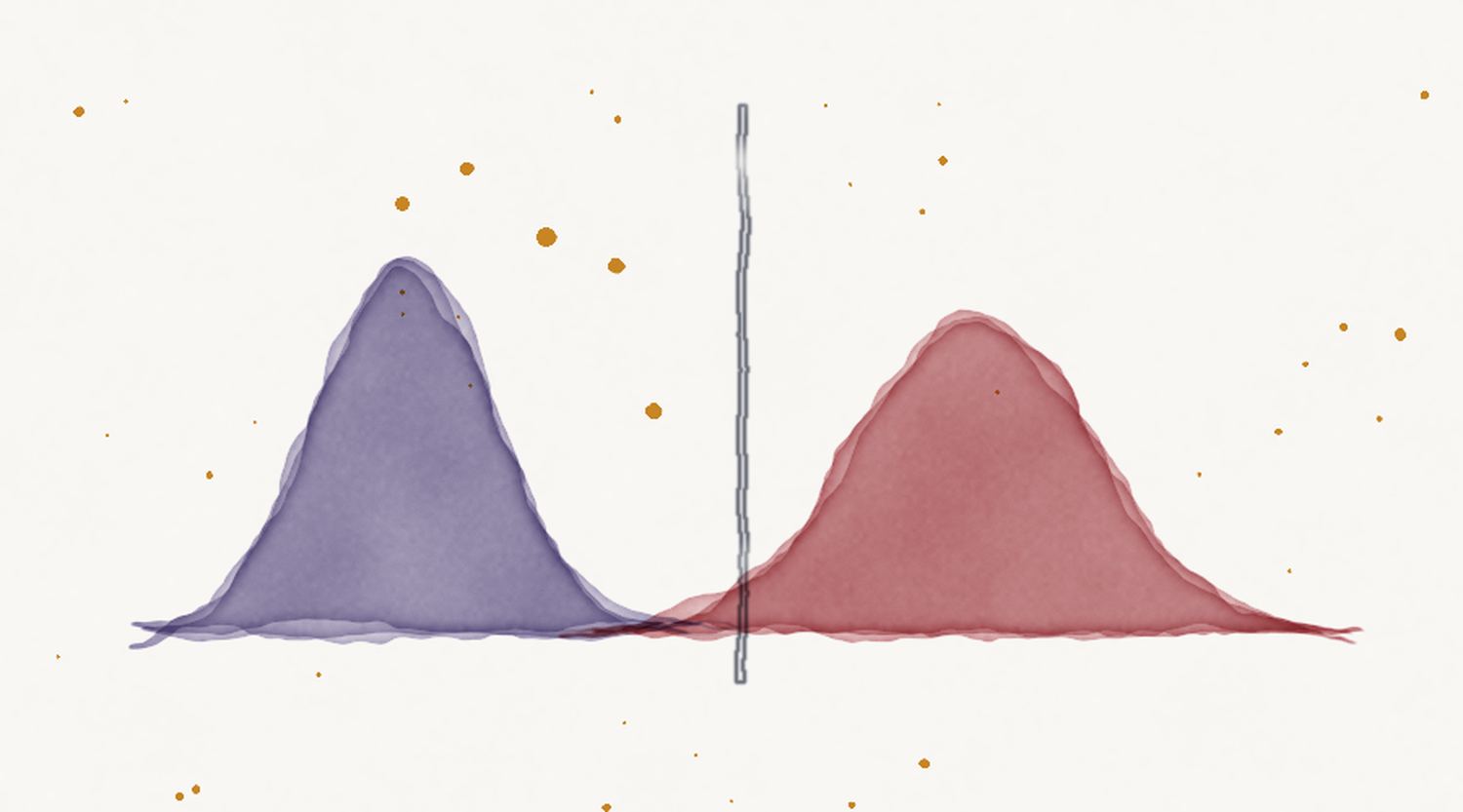
فانت بتعتبر الايكونوميك داون تيرن او الانفليشن او معدل التضخم ده داتا بوينت جديده او فيتشر جديده هو مش فشل للموديل لا هو داتا بوينت دخلت جديده فبالتالي بتطور الموديل بشكل مستمر.
You treat an economic downturn or inflation as a new data point or a new feature. It is not a failure of the model; it is a new signal entering the system, so you evolve the model continuously.
From a slide to a live loan book
A credit model is only as good as the real data it runs on.
Since 2021, Egyptian lenders have faced fast rises in prices and interest rates. The hosts cite a figure of about 27%. This upset the past patterns that bank rely on. Galal Elbeshbishi started Synapse Analytics with his co-founder Ahmed after he kept seeing the same gap. Models looked sharp on clean test data. They stalled on real borrower files.
Inflation drift credit cutoff simulator
CalculatorAdjust the macro inflation shock and static score cutoff to watch solvent borrowers whose nominal bills jumped collide with bad-debt slip-through.
Guess firstPrices jump 35%, and a bank keeps its score cutoff at 640. About what share of good applicants is wrongly rejected?
Illustrative model: demonstrates the tradeoff described across Chapters 1 to 3, where raising a static cutoff curbs bad-debt leakage while rejecting creditworthy borrowers whose nominal spending shifted.
Companies often think their own data is 100% clean. Launch day proves them wrong. A credit model takes messy inputs and cleans them. It then gives one number. That number sets a between approval and rejection. Make the cutoff too strict, and the loan book cannot grow. Miss on risk once, and the loss eats the margin.
المعادله في الاخر بتدي رقم والرقم ده على اساسه بيتاخد قرار... في التسليف زي الاي سكور مثلا، احنا بنقول ان اي حد فوق كذا يبقى كويس اي حد تحت كذا يبقى مش كويس.
The equation ultimately produces a number, and a decision is made on that number. In lending, like with i-Score, we say anyone above this mark is good, and anyone below it is not.
Scorecard
A scorecard is a points system a bank uses to rate how risky a borrower is.
Cutoff
The cutoff is the score line: applicants above it are approved and those below it are rejected.
When inflation moves the ground under a model
Inflation is a new signal to watch, not proof that the model failed.
A team builds a model in one quarter. Borrowers repay in later quarters. In between, the world can change. Salaries move slowly. Household bills, utility prices, and currency costs jump. Then income no longer predicts repayment as it did. This can happen even with no fraud or policy change. Data scientists call it .
النهارده الانفلو بتاعتي على البنك ده او على الانستوشن ده اختلف بقى عندي فور اكزامبل منطقه عمري ما كنت بشوفها كتير فجاه بقت 20% ما ده خلي بالك الفوركاست هيختلف لان انا مش متعود ان الحته دي تكبر قوي كده.
My inflow into this bank or institution changed. A geographic area I barely used to see suddenly became 20% of inflow. The forecast will shift because the model was never used to that segment growing so fast.
A model that is not tuned for inflation misreads it as reckless spending. Say a family's grocery and utility bills rise 35%. It buys the same basket as before. Yet it now looks overstretched next to an old, fixed . The model then rejects families who can pay.
Nominal bill spike vs. real default signal
CalculatorToggle between a static nominal cutoff and relative cohort normalization as household basket inflation climbs.
Guess firstA family buys the same basket, but prices rise 35%. A model with a fixed pound cutoff rates its risk out of 100. What score does it give?
Illustrative model contrasting static nominal income-expense ratios against the relative population bracketing method described at 12:21.
Drift
Drift is when the real world changes and a model's past patterns stop working.
Cutoff
The cutoff is the score line: applicants above it are approved and those below it are rejected.
Compare borrowers to today's crowd, not last year's pound
Ranking applicants against today's cohort holds up under inflation better than fixed pound cutoffs.
Exchange rates and interest rates move every quarter. Some risk teams then add outside signals, such as gold prices, to their rules. Elbeshbishi warns against this. When every market signal moves at once, raw values can mislead a model. They can also go stale fast.
احسن حاجه في الدنيا هي بتبص على اوفر اول بوبيوليشن... انا النهارده بشوف العميل ده ريلاتيف لبقيه الناس اللي بتقدم هو في انهي براكت، فلو حصل انفليشن هتلاقي نفس البراكت بتاعك.
The best approach is looking at the overall population. I check where this customer sits in income brackets relative to everyone else applying today, so even if inflation hits, that relative bracket holds.
Instead, rank each applicant against the : everyone applying today. Inflation changes the pound amounts, but not the ranking. Average pay might be 10,000 pounds. It might be 20,000 pounds after inflation. Either way, a careful borrower stays in the top quarter. Fresh signals from app use make this even clearer.

More detail
When currency exchange rates and policy rates shift quarterly, risk teams often try to bolt external macro tickers like gold prices or CPI indexes straight into decision trees. Elbeshbishi warns that raw macro inputs easily overfit or go stale when every market indicator moves at once.
Ranking applicants against the live cohort turns nominal distortion into a stable signal. Whether an average applicant earns 10,000 or 20,000 pounds after inflation, top-quartile financial discipline relative to peers remains visible, especially when paired with recent behavioral app signals.
Cohort
A cohort is the group of people you compare against, here everyone applying today.
Why a bank must explain every rejection
A rejection that cannot be explained cannot be used, so reason codes matter.
Textbooks say deep neural networks win on accuracy. A bank under the Central Bank of Egypt or the (FRA) needs more. Accuracy without an explanation is not usable. Examiners and customers want the exact reasons for each denial.
الريجوليتور في اي بلد بيبتدي يبوش: انا عايز اعرف بالضبط هو رفض ليه عشان لما اروح اقوله، اقوله انت اترفضت عشان واحد اتنين تلاته اربعه، ما ينفعش اقوله اصل الماشين قررت ان انت مرفوض.
The regulator in any country pushes back: I want to know exactly why they were rejected so I can tell them reasons one, two, three, and four. You cannot say, 'The machine decided you are rejected.'
Synapse pairs its models with and the lender's own credit policy. Reason codes list the exact factors behind a decision. This allows a step Elbeshbishi calls Second Look. It finds near-miss rejections. In these, the borrower ran out of room under the (DBR). The lender can then show which card or loan to close to qualify.
Regulator explainability vs. black-box inspector
CalculatorSwitch between an opaque neural score and an explainable reason-code scorecard, then test Second Look DBR recovery.
Illustrative audit simulation grounded in the CBE/FRA explainability requirement (13:17) and Synapse Second Look workflow (17:46).

Financial Regulatory Authority (FRA)
Egypt's regulator for finance outside banks, such as installment apps, insurers and microfinance.
Reason codes
Reason codes are short labels that list the exact factors behind a credit decision.
Debt Burden Ratio (DBR)
The Debt Burden Ratio is the share of a person's income that already goes to debt payments.
How to win over a bank's credit committee
Credit committees buy risk controls and a clear view of the portfolio, not AI demos.
Early on, Synapse pitched AI as innovation. Experienced bank credit officers pushed back. A bank does not hand its live loan book to an experiment. Trust came only later, when the software read the bank's own past loans. It automated manual underwriting steps. It also showed, in numbers, what each policy change would do to the loan book.
فتعرف تفتح البوك بتاعك يكبر اكتر بكتير قوي ويزاوت ريسك وهديك كل الكونترولز اللي ممكنه ان انت لو حصل اي مشكله في السوق او الداتا نفسها حصل فيها درفت.
You can open your loan book to grow far larger without adding risk, while holding every control needed if the market hits trouble or the data itself drifts.
The worst operating mistake is leaving a live model untouched as inflation speeds up. Each month without a refresh widens a gap. On one side is the safety the model predicts. On the other are the late payments that really happen.
Model retraining lag & default drift
CalculatorSlide the months since last model recalibration and annual inflation pace to measure predictive Gini decay and bad-debt drag.
Illustrative MLOps decay model reflecting continuous monitoring and drift controls discussed at 09:34 and 19:22.
Reading hundreds of credit bureau fields, not one number
The value is in the unused bureau and portfolio signals, used inside your own policy rules.
i-Score is Egypt's . Elbeshbishi was asked if adding Synapse on top of it doubles the model risk. He gives two answers. First, the regulator backed i-Score's behavioral score after a sandbox test. Second, Synapse does not stack one score on another. It feeds the bureau's signals into the lender's own rules.
طيب انا النهارده مش بعمل موديل فوقيه فذير از نو كومباوند ريسك اني وير اكشوالي اللي انا بعمله ان انا بديك التول ان انت ازاي تستعمل ده وتحطه في السياسه الائتمانيه بتاعتك.
I am not stacking a model on top of it, so there is no compound risk anywhere. What I actually give you is the tool to use those signals inside your own credit policy.
Most lenders read only one or two fields from a bureau report. These are the headline number and whether a legal case exists. Hundreds of other fields go unread. So do patterns inside the lender's own book. One example is how repayment differs between cards from CIB and HSBC.

Credit bureau
A credit bureau is a company that keeps records of people's past loans and repayments.
Millions in the bank, rejected for a 5,000-pound loan
Bank-account cash flow shows who can repay, even before a first loan is on record.
Credit bureaus only score people who have borrowed before. A first-time borrower has no credit history, so the score is zero. That locks them out of formal finance. It does so even when their cash flow is strong.
ساعات في ناس بتترفض معاها فلوس كتيره جدا يعني فور اجزامبل حد عنده بيزنس قوي جدا عنده حسابات في البنوك بملايين وكل حاجه بس عمره ما اخد كريديت كارد عمره ما خد قرض وبتاع لو راح قدم بكره الصبح على قرض ب 5000 جنيه هيترفض.
Sometimes people with plenty of money get rejected. Someone with a strong business and millions in bank accounts who has never taken a credit card or a loan can apply tomorrow morning for a 5,000 EGP loan and get rejected.
Synapse has worked in Egypt, Jordan, Saudi Arabia, the UAE, and Latin America. Elbeshbishi sees a shift in Gulf banking. Business owners with large balances but no salary often struggled to borrow. Banks wanted a salary letter. Now banks score cash flow inside their own accounts. They look at deposits and account activity. Then they offer credit lines before the customer asks.
Keeping data at home beats conference hype
Rules that keep data local looked like a limit, but became a lasting advantage.
Tech conferences love flashy generative AI demos. Banks in the region live by a strict rule. Customer records cannot leave the country for foreign clouds. A bank may want the strong AI that global labs such as Anthropic offer. But it does not want to send its data out to use it. The other path is to host open models like GLM or Kimi yourself. That is costly. It needs expensive GPU chips, and local data-center space is scarce.
Focused models built for one job beat big, showy pilots. Synapse built its own Arabic tool from scratch. Global tools handled Arabic poorly at the time. Building its own also kept its intellectual property and customer data inside the country.
احنا يمكن عايز اقول احنا محظوظين ما كناش شايفين ان ده الانجل احنا كنا بنعمل ده عشان غصبا عننا هنا لازم تبروتكت الداتا بتاعتك كلها والداتا ما تطلعش بره.
We were fortunate without realizing it was the strategic angle. We built this way out of necessity because here you must protect all your data and never let it leave.
Production AI economics calculator
CalculatorAdjust internal data readiness and monthly credit volume to compare flashy generative pilot burn against governed decisioning ROI.
Illustrative economics model reflecting Chapter 1 data-cleanliness friction and Chapter 8 on-prem/sovereign infrastructure tradeoffs.

More detail
Tech conferences celebrate frontier generative AI demos, yet regulated MENA banks live by a strict boundary: sensitive borrower records cannot leave local jurisdiction for foreign clouds. A bank may want the intelligence that frontier providers such as Anthropic offer without sending its data abroad, yet self-hosting capable open-weight models like GLM or Kimi triggers steep local GPU hardware costs and scarce data-center capacity.
Focused models built for specific tasks outperform bloated pilots. Synapse invested early in building proprietary Arabic OCR from scratch when global APIs handled Arabic poorly, keeping intellectual property and customer data entirely inside sovereign walls.
OCR
OCR is software that reads text from scanned pages or photos.
Agents prepare the file; people stay accountable
AI agents earn trust by preparing files that a human signs off.
After the years of near-zero interest rates ended, cost cutting made automation fashionable. Some said AI agents would replace engineers and credit officers overnight. Elbeshbishi disagrees. It is true that early models failed at simple tasks, like counting the r's in strawberry. But he says the deeper barrier in banking is not skill. It is accountability.
عمره ما يروح ياخد قرار او يعمل اكشن من غير ما يرجعلك ده ما عندوش تقريبا [صلاحيه] هو بس بيرجع اللي هو مستشار فقط.
It never goes off to make a decision or execute an action without coming back to you. Right now it holds no autonomous authority; it acts purely as an advisor.
An OpenAI and Hugging Face agent experiment also comes up. As told on air, 700 turned back and 500 carried on, and one agent acted in a way no one expected. Elbeshbishi's point is that a lender cannot hand decisions to a black box. Instead, the agent does the grunt work. It builds the full file and logs every step. Then a human signs off.
ان اي اي يقدر يعمل كل حاجه لوحده هي مشكله اكاونتابيليتي اكتر من اي حاجه.
Whether AI can do everything on its own is an accountability problem more than anything else.
Four safeguards before an AI agent touches live credit
- 1
Human-authored credit policy first
Lock risk appetite, regulatory limits, and policy thresholds before allowing any agent to propose actions.
- 2
Grunt-work preparation only
Use agents to gather documents, verify public SME checks, and summarize exceptions rather than disburse capital.
- 3
Step-by-step action provenance
Log every tool call, data lookup, and intermediate calculation so examiners can replay how the recommendation formed.
- 4
Explicit human sign-off
Record human approval alongside the agent's trace so clear institutional accountability stays intact.
More detail
Post-zero-interest-rate cost discipline made automation fashionable, sparking claims that autonomous agents would replace engineers and credit officers overnight. Elbeshbishi pushes back: even where early LLMs stumbled on simple tasks like counting the letters in strawberry, the deeper barrier in banking is not raw capability; it is accountability.
An OpenAI and Hugging Face agent experiment comes up on air: 700 turned back, 500 carried on, and one agent acted in a way no one expected. Elbeshbishi argues that enterprise lending cannot tolerate black-box delegation. Instead, the agent should absorb the grunt work, assemble the complete dossier, and leave an auditable trail of every step before a human signs off.
A checklist for models under inflation
Treat inflation as a live signal, explain every decision, and keep a human accountable.
Elbeshbishi and the hosts close with plain habits. Inflation does not forgive unwatched data pipelines. It also punishes unexplained rejections. Skipping local data control is another trap. Test your own tools against the six rules from the episode.
Elbeshbishi's six-point underwriting resilience test
0 to 2 in place: High drift vulnerability. Static models will misread nominal inflation and stall under regulatory audit. (4 unchecked)
Key takeaways
01. Clean data first
Slide-deck accuracy collapses if production pipelines remain uncleaned.
02. Macro drift is signal
Inflation is a new feature entering the population, not a reason to abandon ML.
03. Inflow shifts fast
A region jumping to 20% of volume breaks static forecasts even with zero fraud.
04. Cohort over nominal
Bracket applicants against today's cohort instead of last year's pound cutoffs.
05. Reject with reasons
CBE and FRA rules require exact 1-2-3-4 causes, never 'the machine said no.'
06. Second Look recovery
Show near-miss DBR denials which card or facility to close to qualify.
07. Speak portfolio
Credit committees trust automated policy controls on their own book, not hype.
08. Mine i-Score depth
Use hundreds of bureau and card-issuer signals instead of one score and a flag.
09. Thin-file cash flow
Score internal deposit activity so millionaire non-borrowers aren't denied 5k.
10. Sovereignty as moat
On-prem and sovereign deployment protects customer records and proprietary IP.
11. Focused beats flashy
Purpose-built Arabic OCR and scoring beat expensive open-ended GenAI pilots.
12. Human accountability
Let agents assemble auditable dossiers, then require human sign-off to act.
Sources
 33:20
More episodes
Mohamed Aladdin · DPI
When the currency halves, did the company grow?
+40% in Pounds · -50% in Dollars
Read episode →
Mohamed Negm · Valu
When a loan clears in three minutes, who stops the thief?
180-Second Approval · 15% Cash-Out Cut
Read episode →