Episode 02 · Consumer Credit & Cyber Risk
When a loan clears in three minutes, who stops the thief?
Mohamed Negm, CISO of Valu, traces what happens beneath a three-minute consumer credit approval: from AI-forged IDs and street cash-out collusion to open APIs that leak millions of records.

الغلطة اللي دايما الناس بتبصلها، بتبص للـ Security as a technical issue. It's not a technical issue, it's a business problem.
The mistake people constantly make is viewing security as a technical issue. It is not a technical issue; it is a business problem.
The math of thin margins vs. principal loss
modelAdjust monthly instant approvals (20,000 EGP average ticket at an illustrative 8% net margin) against unstopped fraud leakage.
Illustrative model: because fraud steals 100% of principal while good loans earn a single-digit spread, a 1.5% leak erases nearly a fifth of earned margin.
Three minutes on the screen rests on a mountain underneath
Commercial teams in consumer finance live by one clock: approve the limit while the shopper is still standing at the checkout counter. Every extra step bleeds conversion. Yet in lending, unlike social software, a bug does not merely crash a session; it wires out cash that rarely returns.
Negm describes the three-minute mobile onboarding flow as the visible tip of an iceberg. Speed at the glass works only because an automated verification stack runs beneath the surface in parallel before a pound of credit becomes spendable.
ده نقدر نسميه الـ top of iceberg، إنما الجبل نفسه كله موجود تحت وعملاق جداً.
We can call that the tip of the iceberg, whereas the mountain itself sits underneath and is colossal.
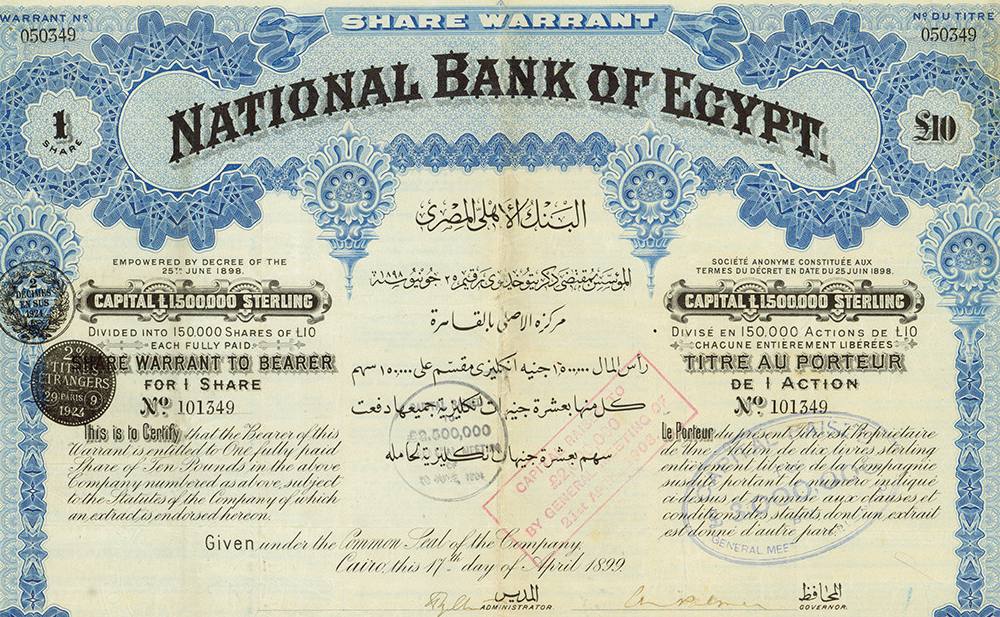
Sub-three-minute credit is safe only when deep verification runs automatically beneath the screen without slowing the borrower.
Four independent registry checks replaced the paper photocopy
For over a century, Egyptian finance fought forgery with physical ink, embossed stamps, and paper custody. When onboarding moved onto phones, Egypt's Financial Regulatory Authority issued Decrees 139, 140, and 141 of 2023 to turn those physical guarantees into live digital cross-checks.
Negm walks through the four gates in sequence: optical scans verify physical card security watermarks to reject photocopies; civil registry queries confirm the printed factory serial number; biometric liveness checks match a live selfie to government portraits; and telecom database integration confirms the mobile SIM belongs to that exact National ID before e-signing.
Toggle the four FRA onboarding gates
modelSwitch individual verification layers off to see which onboarding fraud vector slips into credit approval.
Mechanism map derived from FRA Decrees 139, 140, and 141 of 2023 as described at 02:54.
Digital identity holds only when civil registries and telecom networks corroborate the applicant independently of the submitted image.
Generative AI forges clean cards, ending format-only checks
Why go all the way back to government registries on every application? Negm cites recent US industry losses of roughly $3.3 billion from synthetic identity fraud alone. Generative tools now assemble documents with valid checksums, plausible typography, and realistic camera grain in seconds.
He points to an investigation by 404 Media in which an underground website generated counterfeit British passports crisp enough to pass automated KYC checks on cryptocurrency exchanges. Any system that merely inspects pixels without querying the issuing authority is checking costume design, not identity.

When generative models produce structurally flawless IDs on demand, only live sovereign registry queries separate a citizen from a fabrication.
Inflation turns consumer installment limits into street ATMs
Not every threat comes from a hacker; macroeconomics creates its own fraud market. After currency floatation and sharp inflation squeezed household cash, some borrowers began treating Buy Now, Pay Later (BNPL) limits as emergency cash lines through a street practice known locally as Taseel (credit monetization).
Negm lays out the exact arithmetic: a customer uses a 20,000 EGP installment limit at a complicit phone shop. No phone ever leaves the shelf. The merchant pockets a 3,000 EGP cut (15%), hands the borrower 17,000 EGP in paper bills, and walks away risk-free while the lender carries an uncollateralized cash loan.
Peel back a Taseel cash-out transaction
modelAdjust the nominal installment ticket and merchant cut, then drag the X-ray slider across the receipt.
Default values (20,000 EGP ticket, 15% merchant cut = 3,000 EGP) match Mohamed Negm's on-air example at 08:45.
Under inflation, liquidity-starved borrowers and complicit merchants convert goods financing into unbacked high-risk cash loans.
One rogue storefront cashed out 4.7 million yuan in four days
Credit monetization is not uniquely Egyptian; it shadows instant consumer credit everywhere. Negm recalls the landmark 2015 case on Ant Group's Huabei platform in China, where a single colluding merchant spun up fake online storefronts exclusively to liquidate BNPL limits.
Within four days, that merchant processed 4.7 million yuan in sham purchases and pocketed 400,000 yuan in personal commission before Chinese police shut the ring down and courts handed down a prison sentence. Digital credit platforms swiftly rewrote merchant agreements to ban cash substitution explicitly.

Cash-out collusion scales from a single shop into millions within days unless merchant contracts and automated monitors lock together.
A single fake purchase blends in; fourteen on one phone do not
Looking at one 20,000 EGP invoice in isolation tells an analyst almost nothing. Fraud betrays itself in clusters. Negm's security and fraud teams correlate device fingerprints, velocity, limit exhaustion, and geography across every merchant terminal.
Three patterns light up the board immediately: dozens of unrelated borrowers signing in from the same physical handset, newly approved limits drained to the last pound within minutes, and customers registered in distant governorates converging on a tiny side-street kiosk whose monthly volume defies its square footage.
Spot the colluding kiosk in the telemetry
modelCompare borrower distance-to-store (km) and accounts per device fingerprint on an ordinary shop day versus a cash-out ring.
Illustrative telemetry plot reflecting the device-reuse and geospatial anomaly signals described at 11:07.
A single sham sale looks ordinary; fourteen accounts sharing one phone at a tiny kiosk miles from home is an unmistakable alarm.
Syndicates advertise in public feeds before they touch your app
Kozman points out an uncomfortable street truth: cash-out brokers do not hide on the dark web; they buy ads and run public groups on Facebook and Telegram. Waiting for fraudulent packets to hit your database means arriving late to a crime organized in broad daylight.
Negm pairs internal telemetry with external Brand Protection crawlers that continuously scan social groups, rogue mobile APKs, and lookalike phishing domains, triggering legal and registrar takedowns before mass victims hand over OTPs.
Four external defense loops running outside the firewall
Social syndicate crawling
Automated monitors flag public Facebook and Telegram groups advertising credit-to-cash brokerage.
Rogue app hunting
Scanners detect counterfeit mobile packages impersonating consumer finance brands to harvest credentials.
Typosquatted domain takedowns
Registrar takedown workflows disable lookalike phishing links within SLA windows.
Merchant compliance offboarding
External solicitation leads feed back into merchant risk scoring to freeze and terminate complicit terminals.
Fraud defense starts outside the firewall by hunting impersonation domains and social-media cash-out brokers before victims sign in.
Open APIs are every CISO's headache until security joins day one
Modern fintech scale depends on opening doors: Open Banking rails, e-commerce checkouts, payment aggregators, and merchant ERPs. Asked how he sleeps while publishing endpoints onto the public internet, Negm laughs and calls partner APIs the recurring pain of every CISO.
الـ Security هي الـ enabler بتاع الـ business، as long as هي خدت الـ journey صح ومن البداية.
Security is the enabler of the business, so long as it joins the journey properly from the very beginning.
Reputation as 'the masters of No' happens only when product teams invite security forty-eight hours before launch. Finding architectural flaws at the finish line turns a planned one-week release into three or four weeks of emergency refactoring.
Day-one security vs. finish-line rework
modelAdjust the number of external partner API integrations in a release to compare delivery time.
Anchored to Negm's on-air benchmark at 17:30 (a 1-week release stretching to 3 to 4 weeks when security is retrofitted).
Treating security as an afterthought stretches a one-week launch into a month of rework, while day-one design makes speed safe.
You cannot defend an API endpoint nobody remembers publishing
Fast-growing engineering teams ship staging hooks, partner sandboxes, and v1 endpoints every sprint. Years later, v3 is hardened behind a gateway while forgotten v1 test routes still point straight at production tables.
I will not be capable to secure what I don't see.
I will not be capable of securing what I cannot see.
Negm cites the 2022 Australian telecom API breach (Optus), where an exposed, unmonitored API endpoint allowed an attacker to scrape 9.8 million customer passport, driver-license, and phone records without breaking a single cipher.
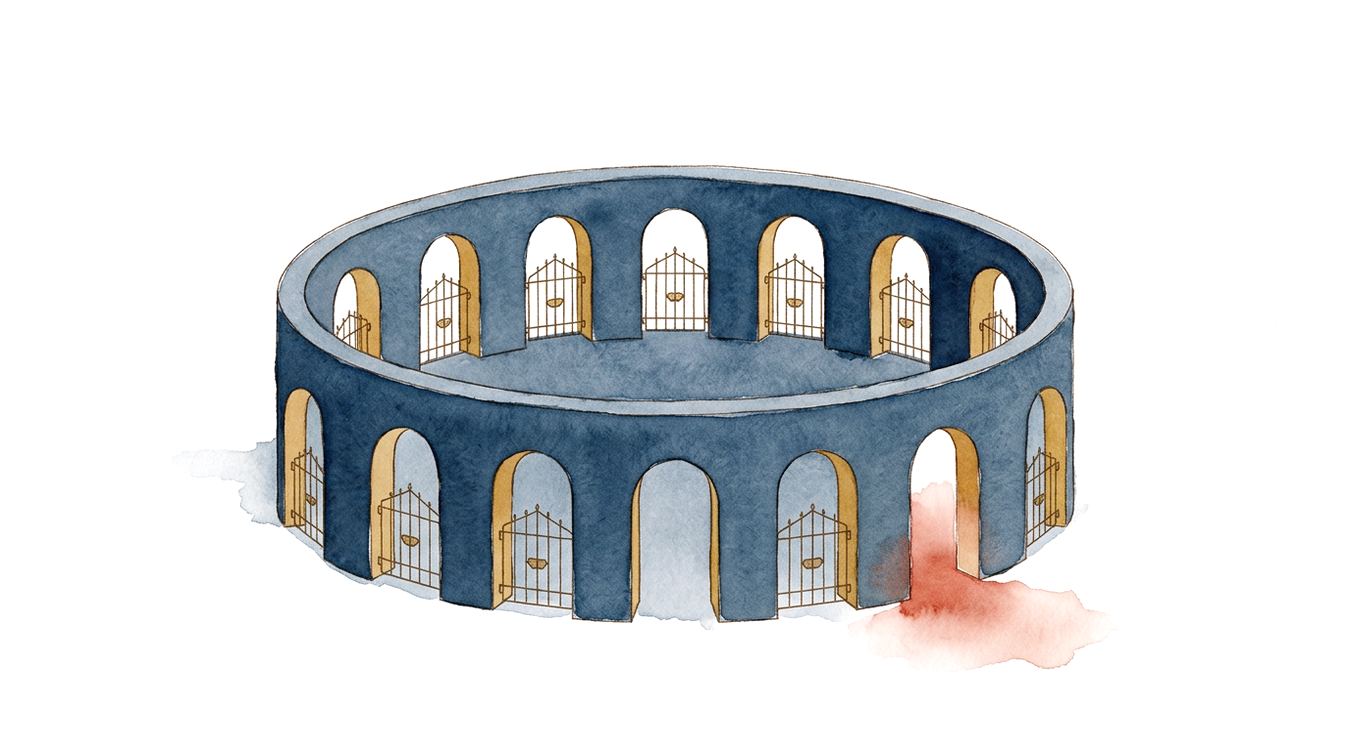
A living API inventory and ruthless retirement of stale endpoints matter as much as any firewall rule.
Proving who knocked means nothing if every room inside is unlocked
How did one script pull 9.8 million records so effortlessly? Negm highlights the number-one vulnerability on the OWASP API Security Top 10: Broken Object Level Authorization (BOLA). Developers check that a token belongs to a real logged-in user, then forget to check whether the requested record ID actually belongs to that user.
الـ Authentication: انت جاي، أنا عايز أعرف انت فعلاً شريف ولا لأ؟ الـ Authorization: انت من حقك تعمل إيه؟
Authentication asks: you arrived, are you actually Sherif or not? Authorization asks: what are you permitted to do?
With Egypt's Personal Data Protection Law No. 151 of 2020 and its executive regulations taking full effect, sequential data leakage now carries direct statutory penalties alongside reputational ruin.
Step through sequential IDs with and without BOLA protection
modelSigned in as Customer #10041, request neighbor IDs #10042 and #10043, then enable Object-Level Authorization.
Illustrates the Authentication vs. Object-Level Authorization boundary explained at 22:32.
Authentication only confirms who is at the gate; without object-level authorization, one valid login can scrape an entire database.
A compromised vendor integration siphoned $1.5 billion in plain sight
Hardening your own servers does not close the perimeter if a trusted vendor holds signing or routing power. Negm points to the $1.5 billion Bybit heist, where attackers compromised an external wallet integration layer rather than breaching the exchange's core vault directly.
Because the injected payload rode inside a trusted partner workflow, internal operational dashboards initially treated the outgoing transfers as routine traffic. That is why Negm enforces recurring annual Third-Party Risk Assessments (TPRA), independent penetration tests, and independent verification of outbound settlement instructions.

Your perimeter is only as strong as the least-audited vendor allowed to touch transaction routing.
One breach revokes trust, so threat modeling starts on day one
In the closing stretch, Negm looks ahead at autonomous offensive AI: novice attackers now generate working exploit chains in minutes, while frontier models run automated vulnerability discovery against live software stacks. Defending manually against machine-speed probing is already obsolete.
أنا ممكن incident واحدة تطلعني برة الـ business بالكامل.
A single security incident can knock me out of business entirely.
In regulated financial services under Central Bank of Egypt (CBE) and FRA oversight, capital is replaceable; license standing and public trust are not. Kozman and Negm close on the same rule for young fintechs: hire fractional security architecture and threat-model on day one, because post-breach remediation costs multiples of doing it right.
Negm's six-point day-one fintech defense test
0 to 2 in place: High existential exposure. One POS ring or unguarded partner API can wipe out lending margin. (4 unchecked)
In financial services, security is business continuity: one uncontained breach can revoke both customer trust and your license to operate.
Twelve takeaways from the episode
01. Beneath three minutes
Instant approval is safe only when deep verification runs automatically underneath.
02. Four-gate e-KYC
Cross-check watermarks, civil serials, live biometrics, and NTRA SIM ownership.
03. Synthetic IDs
AI defeats pixel checks; only live sovereign registry queries verify a real person.
04. Taseel cash-outs
Inflation turns goods credit into 15%-haircut street cash loans via complicit shops.
05. Four-day velocity
One rogue storefront cashed out 4.7M yuan in four days; ban cash-outs in contracts.
06. Cluster signatures
Device reuse, instant limit drain, and remote kiosk travel expose collusion rings.
07. Outside the firewall
Hunt cash-out groups, fake apps, and phishing domains across public platforms.
08. Day-one design
Finish-line security turns a one-week launch into a month of patching.
09. API inventory
Retire forgotten test routes; you cannot defend an endpoint you cannot see.
10. Object authorization
Verify record ownership on every API call so one token cannot scrape millions.
11. Vendor perimeter
Audit third-party integrations annually; compromised vendors bypass core vaults.
12. Trust is the license
In money movement and lending, one uncontained incident can end the company.
Regulatory & archival sources
- Financial Regulatory Authority (FRA) Egypt: Digital Onboarding & e-KYC Decrees 139, 140 & 141 of 2023
- Egypt Personal Data Protection Law No. 151 of 2020
- OWASP API Security Top 10 (API1: Broken Object Level Authorization)
- Office of the Australian Information Commissioner (OAIC): Optus 2022 API Data Breach Inquiry
SEASON 01 · CONTINUE THE SERIES
More Dispatches from Season 01
Mohamed Aladdin · DPI
When the Currency Halves, Did the Company Grow?
+40% in Pounds · -50% in Dollars
Watch Episode on Main Stage →
Galal Elbeshbishi · Synapse Analytics
AI Underwriting at 35% Inflation: When the Models Break
35% Inflation · Live Model Drift
Watch Episode on Main Stage →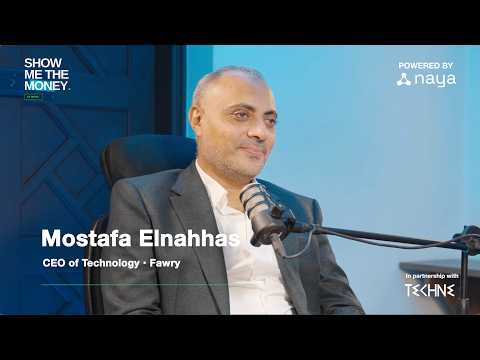
Mostafa Elnahhas · Fawry
Behind 6 Million Daily Transactions at Fawry
6,000,000 Daily Switches
Watch Episode on Main Stage →